Garden Tools
The Garden Tools are a set of child-sized gardening implements—a spade, rake, fork, hoe, and trowel—that become the practical instruments of Mary Lennox's transformation at Misselthwaite Manor. Purchased by Dickon Sowerby from a shop in Thwaite village, they are the first objects that allow Mary to act independently upon the world, turning her desire for "a bit of earth" into a daily reality of digging, weeding, and planting. More than mere equipment, the tools bridge the gap between Mary's isolated, waited-upon existence in India and the hands-on, life-giving work that restores both the secret garden and herself.
Acquisition and Arrival
The tools are obtained after Mary expresses a wish for a little spade to Martha Sowerby, who recalls that her mother, Susan Sowerby, had suggested giving the lonely child a patch of ground to dig. Martha tells Mary that at Thwaite village she saw "little garden sets with a spade an' a rake an' a fork all tied together for two shillings" . Mary, who has money from her allowance, eagerly agrees to buy them. Martha dictates a letter to her brother Dickon, asking him to purchase the set along with flower seeds. When Dickon arrives at Misselthwaite Manor, he brings the tools: "I've got th' garden tools. There's a little spade an' rake an' a fork an' hoe. Eh! they are good 'uns. There's a trowel, too" . The set is complete and sturdy, chosen for a child's use but stout enough to work with.
Use in the Secret Garden
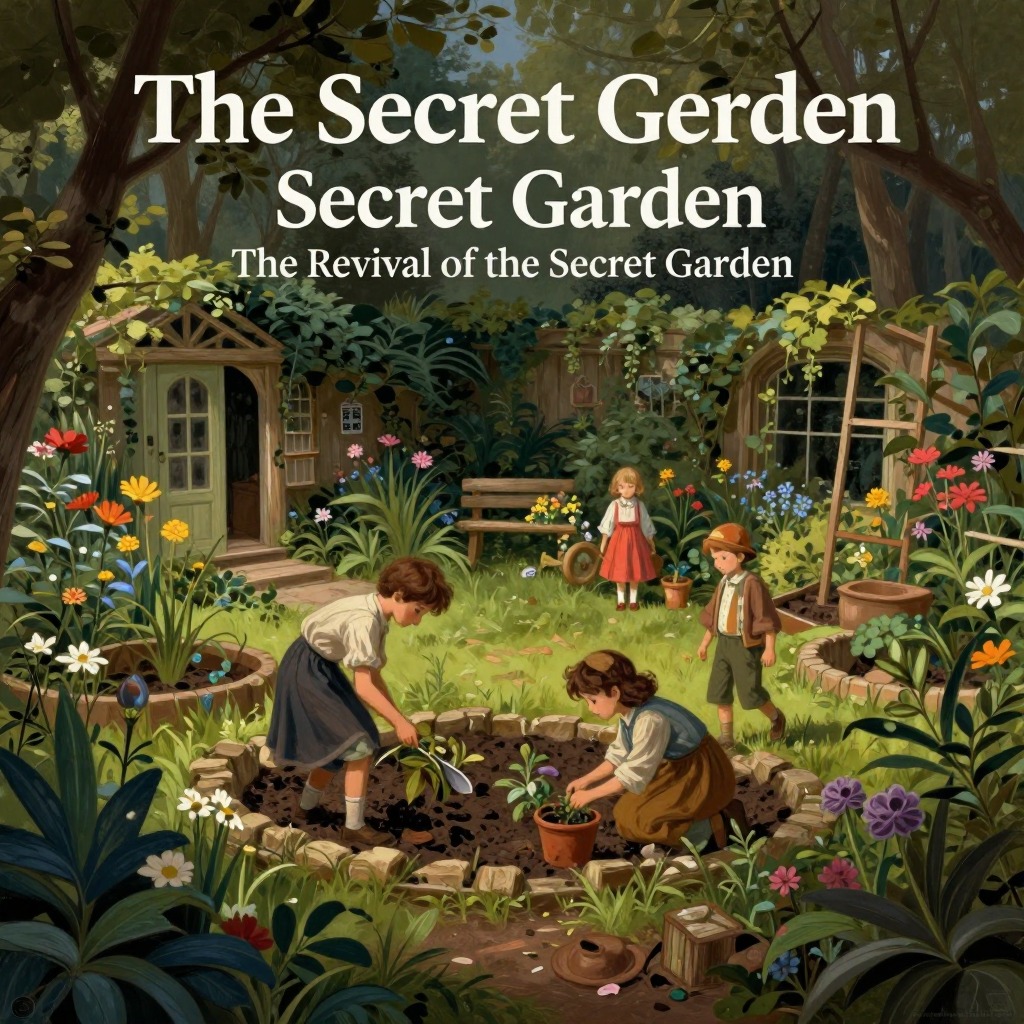
Once inside the secret garden, the tools become the primary means by which Mary and Dickon begin to restore the neglected space. Dickon shows Mary how to use the fork while he digs about roots with the spade, stirring the earth and letting in air . Mary follows him, helping with her fork or the trowel . The spade is used to dig around the roots of standard roses and to clear dead wood; the hoe and rake prepare the soil for the seeds Dickon has brought. The trowel, a smaller hand tool, allows Mary to work in tight spaces among the emerging bulbs. Through these implements, Mary learns the physical sensations of gardening—the smell of turned earth, the effort of digging, the satisfaction of clearing weeds—which contribute directly to her growing strength and appetite.
Significance and Transformation
The Garden Tools are not merely functional objects; they are the material agents of Mary's metamorphosis. In India, she had never dressed herself or picked up anything she dropped, expecting servants to wait on her hand and foot. The tools demand that she use her own hands and legs, building muscle and coordination. They also give her a legitimate, secret purpose: she can work in the garden every day, and the physical labor makes her hungry, rosy-cheeked, and less "contrary." The tools thus embody the novel's central theme that active, purposeful engagement with nature—digging, planting, tending—heals both body and spirit. They are the concrete answer to Mary's plea for "a bit of earth," and through them she becomes a co-creator of the garden's revival, not merely a spectator.